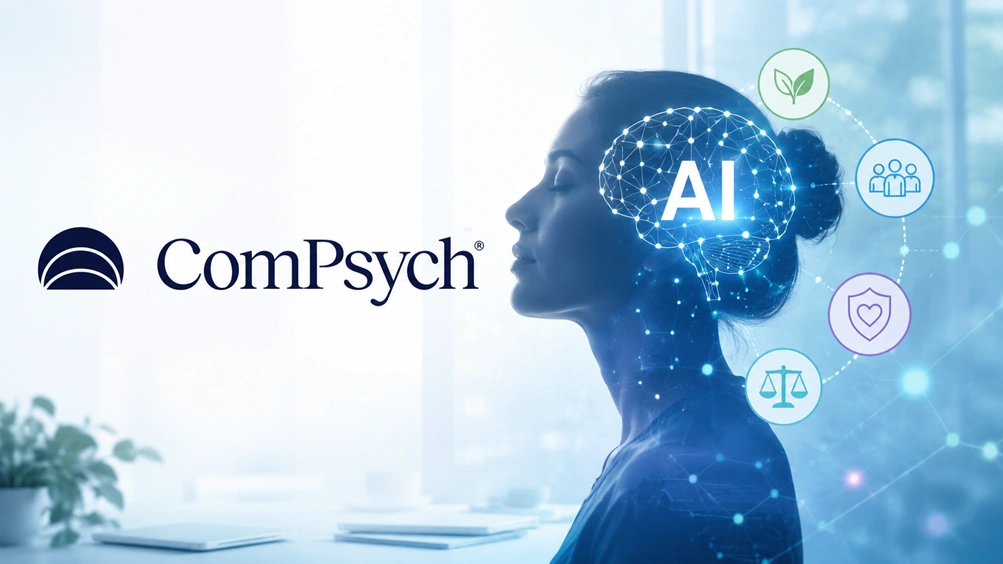
ComPsych AI well-being guide highlights a new approach as ComPsych introduces “Well-being in the Age of AI: Four Paths to Healthy Use.”The AI well-being guide assists people in using AI tools in a balanced manner. Furthermore, the guide emphasizes well-being related to cognitive, emotional, social, and physical aspects.
Furthermore, the organization developed the guide to address growing concerns about AI’s impact on daily life. This guide has been written by Dr. Jennifer Birdsall and Dr. Alexandra Samuel. It gives helpful information to people who are working with generative AI. In addition, it encourages intentional and responsible engagement with technology.
“At ComPsych, we’re seeing the various ways that AI use at work and at home are impacting people’s well-being,” said Dr. Jennifer Birdsall, ComPsych Chief Clinical Officer and co-author of the guide. “Employers need guidance about how to help their employees through this massive transformation. By looking at how AI tools interact with normal human psychology, we were able to develop a resource that provides evidence-based, practical guidance for people, educating them about how they can adapt their AI use to effectively tap into the benefits of this technology while reducing the potential risks to well-being.”
Four Key Areas of AI’s Impact on Well-Being
Additionally, the guide points out four main areas that are impacted by the use of AI. Cognitive well-being entails keeping the ability to make rational decisions. Social well-being refers to the need to preserve interpersonal connections. Emotional well-being revolves around resilience and emotional stability. Physical well-being involves setting boundaries and sustaining one’s healthy routine. Additionally, the guide suggests practical ways to prevent dependency on artificial intelligence programs. Individuals are encouraged to use their tools to achieve maximum benefits while reducing risks. Thus, people will be able to boost their well-being through the use of new technologies. In general, the organization will continue publishing more resources in the upcoming months.
“We hear so much about the risks of AI, but it’s not easy to find out what to do about those risks,” said Dr. Alexandra Samuel, prominent AI researcher and co-author of the guide. “It’s not realistic to think that people are going to stop using AI, when it’s already such a big part of our working and personal lives, and growing all the time. With this guide, we’re equipping people with practical tactics they can use to not only address some of the risks, but also, take advantage of the opportunities to improve their relationships and well-being by making thoughtful use of AI.”
Explore HR Tech News for the latest advancements in Human Resources Technologies and insightful updates from industry experts!
News Source: Businesswire.com